
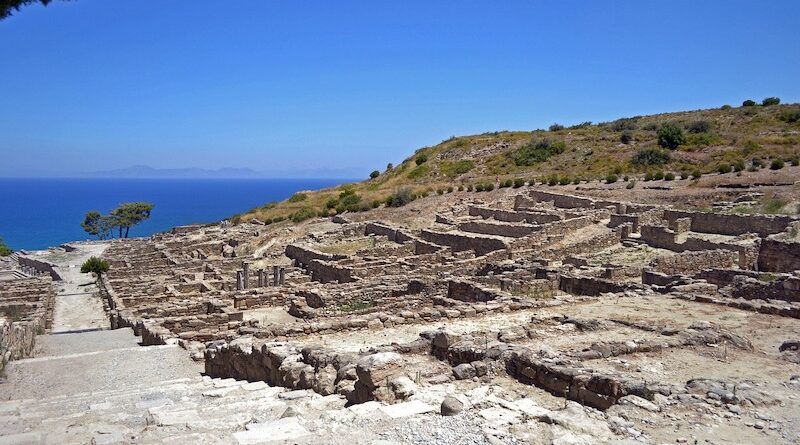
Kamiros in Rhodes Greece
Kamiros is an ancient archaeological site located on the island of Rhodes in Greece. It was one of the three powerful ancient cities of Rhodes, together with Ialysos and Lindos. The site is located on the northwest coast of Rhodes, approximately 33 kilometers southwest of the city of Rhodes.
Kamiros was an important city in ancient times and flourished during the Hellenistic period. The city was renowned for its well-planned layout and impressive architecture. It had a grid-like street plan, similar to other Hellenistic cities, with houses built on terraces along the slopes of the surrounding hills.
The site of Kamiros showcases the remains of the ancient city, including the ruins of houses, public buildings and a temple dedicated to the goddess Athena. Archaeological excavations have revealed insights into the daily life and town planning of the ancient inhabitants.
Visitors to Kamiros can explore the ancient streets, admire the remains of houses and buildings and get a glimpse into the life of the people who once inhabited this city. The site offers splendid views of the surrounding landscape and the sea.
Rhodes itself is a lovely island known for its rich history and natural beauty. Besides exploring Kamiros, visitors to Rhodes can discover other attractions, such as the medieval Old Town of Rhodes, a UNESCO World Heritage Site, with its impressive fortifications and charming narrow streets. The island also boasts beautiful beaches, crystal clear waters and quaint villages just waiting to be explored.
Ancient Kamiros was of strategic importance for several reasons. Here are some factors that contributed to its strategic importance:
Location: Kamiros was located on the northwestern coast of the island of Rhodes, providing it with a strategic position for trade and maritime communication. Its proximity to the sea allowed easy access to trade routes and facilitated connections with other regions of the Mediterranean.
Natural harbour: Kamiros had a natural harbour, providing a safe haven for ships and making it an ideal place for maritime activities. The port facilitated trade and allowed the city to develop into a thriving commercial centre.
Trade Routes: Kamiros was strategically placed along trade routes that connected the eastern Mediterranean with other regions, such as Asia Minor, Egypt, and mainland Greece. Its location made it an important stopover for merchants, facilitating trade in goods and cultural influences.
Agricultural Resources: The region around Kamiros was known for its fertile land, suitable for agriculture. The city had access to an abundance of agricultural resources, including fertile plains and sources of water, which supported its population and contributed to its economic prosperity.
Defensive Position: The natural topography of Kamiros provided some defensive advantages. The city was situated on a hill, allowing for a better vantage point and making it easier to defend against potential invaders or rival city-states.
Regional Influence: As one of the three major cities of the island of Rhodes, Kamiros held political and economic influence within the region. The city was part of a triarchy, together with Ialysos and Lindos, which shared power and controlled different areas of the island. This collective influence strengthened the overall strategic importance of Kamiros.
The combination of its location, natural resources, trade links and defensive position made Kamiros strategically important in the ancient world. These factors have contributed to the city’s prosperity, influence, and ability to play a vital role in regional trade, communications, and power.