

Ottoman Rule in Rhodes
Ottoman Rule in Rhodes: From the 1522 Siege to 1912
Ottoman rule in Rhodes, which lasted for nearly four centuries from December 1522 to May 1912, marked one of the longest and most transformative chapters in the island’s history. Far from being a mere interlude between the era of the Knights Hospitaller and twentieth-century Italian administration, this period brought profound geopolitical, demographic, and architectural changes. Positioned along the vital sea lanes connecting Constantinople to the Levant and Egypt, Rhodes became an administrative and military cornerstone of the southeastern Aegean while developing a distinct multi-ethnic and multilingual society.
The 1522 Siege and the Beginning of Ottoman Rule in Rhodes

The strategic location of Rhodes, a Christian stronghold just miles off the Anatolian coast, made it a primary target for the Sublime Porte as early as the fifteenth century. After repelling the sieges of 1444 by the Mamluk Sultanate of Egypt and of 1480 under Sultan Mehmed II, the island faced its decisive test following the accession of Suleiman the Magnificent.
In the summer of 1522, the young sultan mobilized a massive fleet and an army numbering tens of thousands of men, supported by elite artillery units and sappers. Defending the fortress were roughly six hundred Knights of the Order of Saint John, led by Grand Master Philippe Villiers de l’Isle-Adam, alongside mercenary detachments and the local town militia.
The siege dragged on for nearly six months and was conducted using highly advanced siegecraft for the era. While heavy artillery batteries relentlessly pounded the curtain walls, Ottoman sappers dug an intricate network of underground tunnels beneath the bastions of the various defensive sectors, detonating explosive charges that breached key points of the fortifications.
Although frontal assaults were beaten back at a heavy cost to both sides, dwindling gunpowder supplies, mounting casualties, and the lack of reinforcements from Europe eventually forced the Grand Master to open negotiations. In December 1522, Suleiman granted the surviving Knights an honorable surrender with the honors of war, allowing them twelve days to embark with their relics, archives, and part of their artillery. On January 1, 1523, the Order departed the island permanently, formally ushering in the era of Ottoman rule in Rhodes before eventually settling in Malta in 1530.
Administrative Structure and Role in the Mediterranean
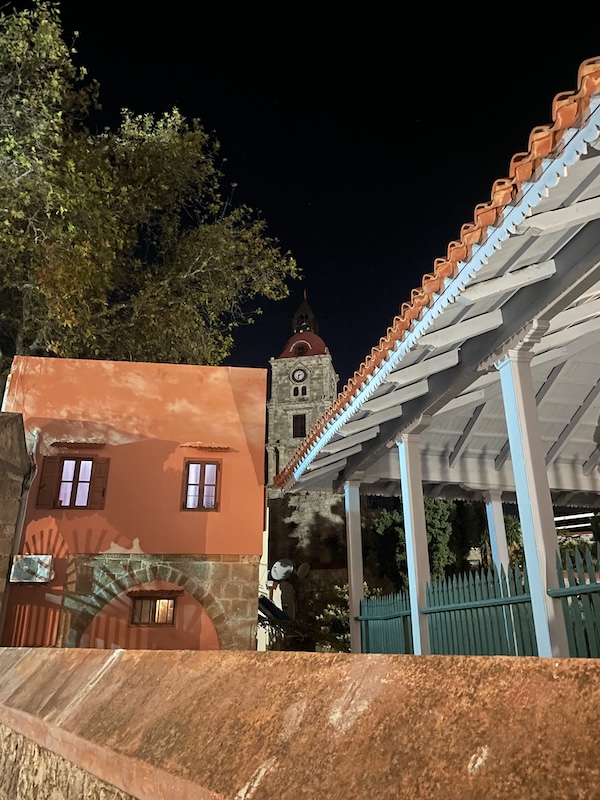
Following its incorporation into the Ottoman Empire, Rhodes was integrated into a centralized administrative framework designed to secure maritime control over the Aegean. The island became part of the Eyalet of the Archipelago (Cezayir-i Bahr-i Sefid), the vast naval province placed under the direct authority of the Kapudan Pasha, the Grand Admiral of the imperial fleet.
Within this territorial division, Rhodes served as the capital of a sanjak (district), exercising administrative and fiscal jurisdiction not only over the island itself but also over several neighboring islands of the Dodecanese. Local governance was entrusted to a sanjakbey (military and civil governor), assisted by the qadi, the Islamic judge responsible for administering justice according to religious law and imperial decrees, while tax collection was managed through military fiefs (timar) and tax-farming leases.
From a strategic and naval standpoint, the 1522 conquest eliminated the last major Christian outpost along Ottoman sea routes, securing vital communications between Constantinople, the Syrian provinces, and Egypt, which had been conquered just five years earlier by Selim I.
Throughout the sixteenth century, the harbor of Rhodes functioned as a premier logistical base, a naval shipyard for fleet repairs, and a staging ground for imperial and corsair squadrons operating against Venice and the Habsburgs, playing an active role in major Mediterranean campaigns from the 1565 Siege of Malta to the 1571 conquest of Cyprus.
As the military frontier gradually shifted toward the central Mediterranean and Ottoman rule in Rhodes and the Levant stabilized, the fortress transitioned from a frontline military outpost into a commercial, customs, and garrison hub. Its ports became regular stops for merchant vessels carrying grain, spices, timber, textiles, and agricultural goods between Anatolia, Alexandria, and Aegean harbors.
Rhodes retained its central role in eastern maritime trade well into the nineteenth century, when shifting geopolitical realities and the administrative reforms of the Tanzimat redrew provincial boundaries, leading to the creation of the Vilayet of the Archipelago, of which Rhodes occasionally served as capital.
Demographics and Society Under Ottoman Rule in Rhodes
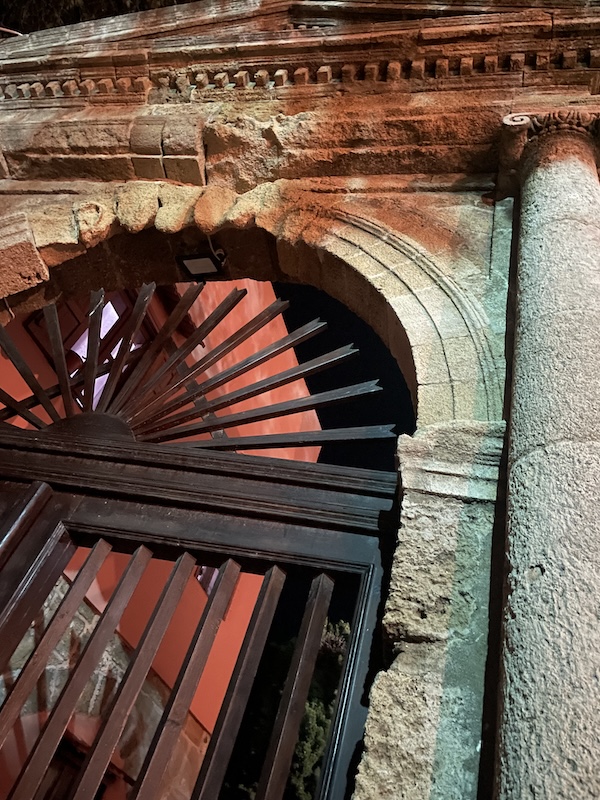
The establishment of Ottoman rule in Rhodes brought about a strict spatial and legal separation among the island’s communities, governed by the millet system of semi-autonomous confessional groups. The walled city, renamed Kale, became the exclusive residential area of the Turkish-Muslim population, comprising officials, soldiers, artisans, and settlers from Anatolia, as well as the Jewish community. Greek Orthodox Christians were prohibited from residing inside the fortified walls; they were permitted to enter during daylight hours to work or trade, but were required to leave before sunset.
Expelled from the walled center, the Greek population settled immediately outside the city gates, giving rise to the outer suburbs known as marasia. New parish churches and community schools flourished in these neighborhoods, while rural life in the island’s interior villages continued along traditional lines under the imperial tax regime.
At the same time, shortly after the conquest, Suleiman encouraged the settlement of Sephardic Jewish families expelled from Spain and arriving from Thessaloniki, granting them tax exemptions to stimulate trade and craftsmanship. Centered around the Kahal Shalom Synagogue, the Jewish quarter, known as La Juderia, developed into a vibrant cultural and religious hub celebrated across the Mediterranean as “Little Jerusalem.”
Architectural Transformations and Landmarks
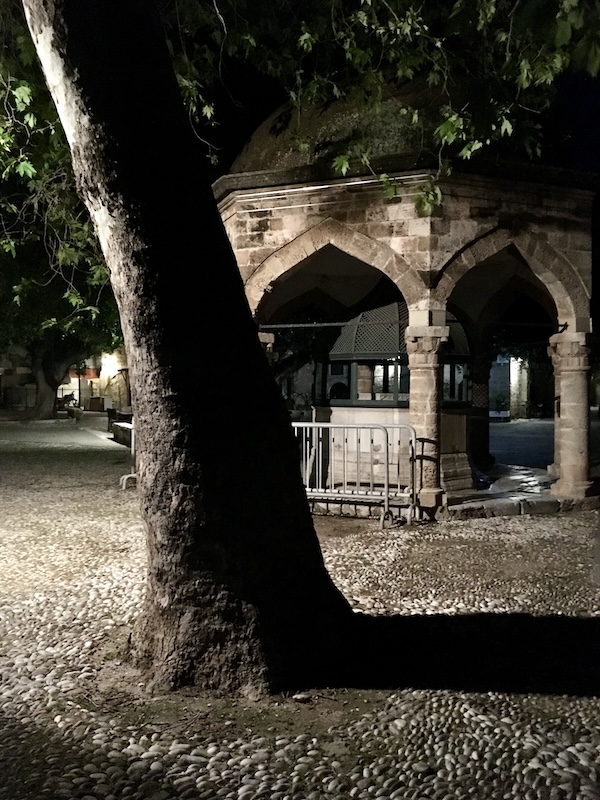
Unlike in several other conquered territories, the authorities overseeing Ottoman rule in Rhodes did not demolish the imposing urban layout and defensive system inherited from the Knights, opting instead to adapt them pragmatically to religious, civic, and military needs. The main Latin churches within the walled city were converted into Islamic places of worship through the addition of minarets, mihrab niches oriented toward Mecca, and lime-wash coverings over figurative frescoes.
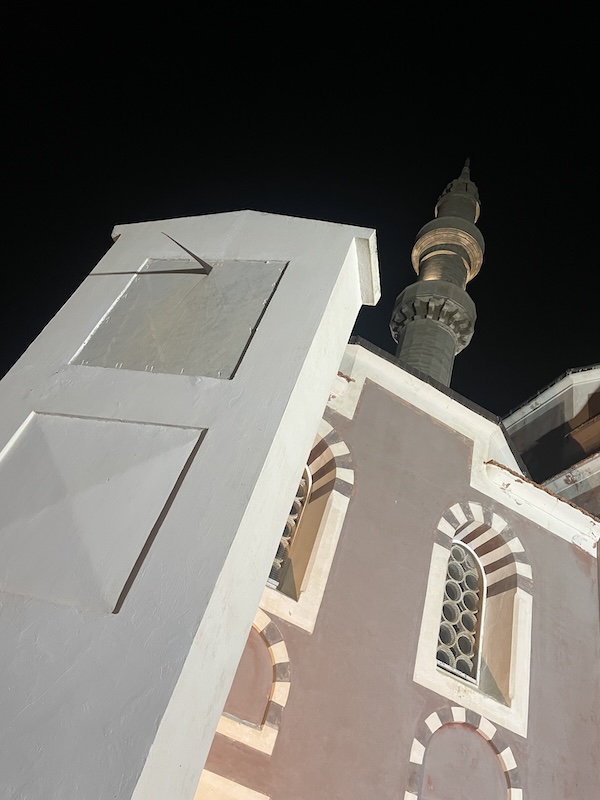
The conventual Cathedral of Saint John in the Collachium became the city’s principal mosque before being destroyed in the nineteenth century. Alongside converted structures, new mosques of sultanic or vizierial foundation were erected, most notably the Mosque of Suleiman, rebuilt in 1808 over its sixteenth-century foundations with its distinctive pink façade, the Mosque of Ibrahim Pasha (1540–1541), the oldest surviving mosque in its original form, the Mosque of Recep Pasha (1588), and the mosque commissioned by Sultan Mustafa III.
Over the centuries of Ottoman rule in Rhodes, the medieval urban fabric was further enriched with civic buildings and charitable foundations endowed through the waqf system. These included public baths such as the monumental Yeni Hammam, public fountains (şadırvan and çeşme), Quranic schools, and soup kitchens.
Of exceptional cultural significance is the Hafiz Ahmed Agha Library, founded in 1793, which still houses rare Arabic, Persian, and Turkish manuscripts, including illuminated chronicles of the 1522 siege. The Hospitaller fortifications were continuously repaired and reinforced, while extensive Muslim and Jewish cemeteries developed along the outer perimeter of the moat.
The Nineteenth Century and the End of Ottoman Rule in Rhodes
During the nineteenth century, Rhodes was swept up in the modernizing reforms of the Ottoman Empire known as the Tanzimat (1839–1876), which formally abolished legal distinctions between Muslim and non-Muslim subjects. This new climate fostered a marked economic and cultural revival within the Greek community, accompanied by the opening of new schools and the expansion of Aegean maritime trade.However, the century was also marked by tragedy, notably in November 1856 when lightning struck the vaults beneath the former Church of Saint John, detonating a forgotten gunpowder magazine dating back to the era of the Knights. The massive explosion leveled much of the Collachium, destroying the historic church, severely damaging the Palace of the Grand Master, and claiming hundreds of lives.
In the closing decades of the nineteenth century and the dawn of the twentieth, the progressive political and military weakening of the Sublime Porte left the Dodecanese vulnerable to European ambitions. The final chapter of Ottoman rule in Rhodes came in May 1912 during the Italo-Turkish War, when an Italian expeditionary force landed on the island and defeated the local garrison at the Battle of Psithos, bringing 390 years of Turkish sovereignty to an end. With the signing of the Treaty of Lausanne in 1923, the newly established Republic of Turkey formally renounced all claims to the archipelago, cementing the international transition from Ottoman rule in Rhodes to Italian administration.
The Secret Of The Knights by Roland Houterman & Christine Clarence.