
Hellenistic and Roman Period in Rhodes: Art, Trade, and Naval Power
The Golden Age of the Hellenistic and Roman Period in Rhodes
The Hellenistic and Roman period in Rhodes represents the pinnacle of the island’s political independence, maritime supremacy, and artistic brilliance. Following the unification of the three ancient Doric city-states, Ialysos, Kamiros, and Lindos, in 408 BC to found the new capital on the northern tip of the island, Rhodes emerged as one of the wealthiest and best-governed republics in the eastern Mediterranean. Designed according to the orthogonal grid plan of Hippodamus of Miletus and equipped with five natural harbors, the city quickly turned its strategic position along the sea lanes between Greece, Egypt, and the Levant into an unmatched commercial advantage.
The 305 BC Siege and the Creation of the Colossus

After expelling the Macedonian garrison following the death of Alexander the Great in 323 BC, Rhodes pursued a policy of armed neutrality and close commercial ties with Ptolemaic Egypt. This independence was put to the ultimate test in 305–304 BC, when Demetrius Poliorcetes (“the Besieger”), son of Antigonus, laid siege to the city with a massive fleet, tens of thousands of soldiers, and colossal siege engines, including the famous iron-plated tower known as the Helepolis.
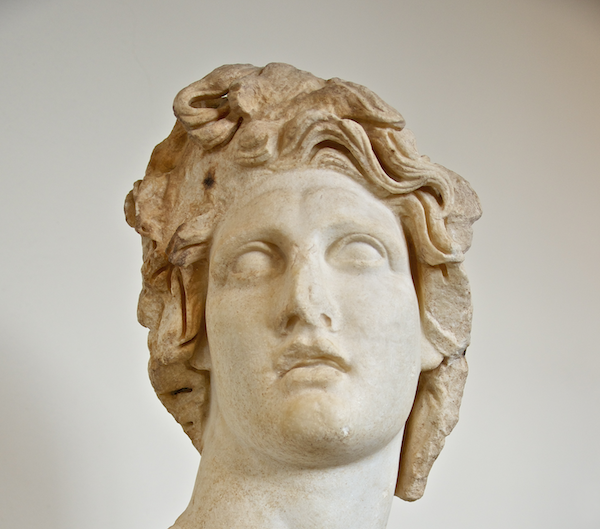
For an entire year, the citizens of Rhodes mounted a heroic defense, reinforcing their walls, launching daring naval raids, and flooding the ground ahead of Demetrius’s advancing siege towers. Unable to breach the city and pressured by diplomatic mediation from Ptolemy I of Egypt, Demetrius finally lifted the siege and signed a peace treaty recognizing Rhodian autonomy. Using the funds raised from selling the abandoned siege equipment, the Rhodians commissioned the sculptor Chares of Lindos to build the legendary Colossus of Rhodes, a monumental bronze statue dedicated to the sun god Helios that stood as one of the Seven Wonders of the Ancient World until it toppled in the devastating earthquake of 227 BC.
Maritime Supremacy and the Lex Rhodia

Throughout the Hellenistic and Roman period in Rhodes, the island’s prosperity rested on its disciplined navy and its absolute commitment to keeping Aegean sea lanes free from piracy. Operating as the self-appointed maritime police of the eastern Mediterranean, the Rhodian fleet safeguarded merchant shipping and enforced commercial stability across the region. Its reputation for naval governance was so authoritative that its maritime code, known as the Lex Rhodia, was later adopted by the Roman Empire and laid the foundational principles of modern international maritime law, particularly regarding shared liability for jettisoned cargo during storms.
Backed by a stable currency, active banking houses, and grain distribution networks, Rhodes stood as a major financial center of the ancient world. Even after the catastrophic earthquake of 227 BC destroyed its harbors, arsenals, and monuments, Hellenistic monarchs from Egypt, Syria, Asia Minor, and Sicily competed to send vast donations of timber, silver, ships, and grain to rebuild the city, underscoring how indispensable Rhodes had become to Mediterranean trade.
Schools of Rhetoric, Philosophy, and Sculpture

Beyond its economic might, the Hellenistic and Roman period in Rhodes witnessed an extraordinary intellectual and artistic flowering. The island became one of the foremost centers of higher education in the classical world, rivaling Athens and Alexandria. Its renowned schools of philosophy, rhetoric, and astronomy attracted leading thinkers, such as Posidonius and Panaetius, as well as prominent Roman statesmen and orators, including Cicero, Julius Caesar, and the future Emperor Tiberius, who spent several years studying and residing on the island.
In the visual arts, the Rhodian school of sculpture achieved international fame for its dramatic dynamism, theatrical composition, and technical virtuosity. Masterpieces created by Rhodian sculptors during this era include the celebrated Laocoön and His Sons (now in the Vatican Museums) and the iconic Winged Victory of Samothrace (housed in the Louvre), works that forever defined the aesthetic canons of Hellenistic art.
Alliance with Rome and Integration into the Empire
As Roman influence expanded eastward in the second century BC, Rhodes initially acted as a valued naval ally, supporting Rome in its wars against Philip V of Macedon and Antiochus III of Syria, and receiving territories in Lycia and Caria on the Anatolian mainland as a reward. However, tensions arose when Rhodes attempted to mediate between Rome and King Perseus of Macedon during the Third Macedonian War (171–168 BC). Viewing this neutrality as disloyalty, the Roman Senate stripped Rhodes of its mainland possessions and dealt a severe blow to its economy by declaring the rival island of Delos a free port.
Despite this commercial setback, Rhodes proved its enduring loyalty during the Mithridatic Wars by successfully resisting an invasion by King Mithridates VI of Pontus in 88 BC. Later, during the Roman civil wars, the city suffered heavy plundering by Cassius in 43 BC, yet retained nominal privileges as an allied city (*civitas foederata*) under Emperor Augustus. During the Imperial era, the Hellenistic and Roman period in Rhodes transitioned into a quieter chapter: under Emperor Vespasian in AD 74, the island was formally incorporated into the Roman Empire, and under Diocletian it became the capital of the *Provincia Insularum* (Province of the Islands), preserving its urban beauty and cultural prestige until the rise of Constantinople.
Archaeological Museum of Rhodes
The Archaeological Museum of Rhodes is hosted in the medieval building that was used as the Hospital of the Knights, also known as Knights Hospitaller. The main exhibition consists of finds from Ialissos and Kamiros as well as a remarkable collection of statues. Recent additions were the artifacts exhibited in the wings dedicated to the Epigraphic and Prehistoric collection of the museum and a small collection of ancient pithoi. The museum also boasts a renovated historical courtyard where mosaic floors from Hellenistic villas are currently exhibited.
The Secret Of The Knights by Roland Houterman & Christine Clarence.